Black History Fact:
In 1619, enslaved Africans were brought to what would become the United States—before the country existed, before democracy, before the Constitution.
Black history does not enter America as a footnote. It enters at the beginning.
Before there was a United States, there was forced labor. Before liberty was written into founding documents, it was denied in practice. Black people were not added later—they were foundational.
This matters, because when something is foundational, it shapes everything built on top of it.
America was not born innocent and later corrupted. It was born conflicted—professing freedom while practicing domination. That contradiction has never been resolved; it has only been managed.
We like to imagine racism as an unfortunate detour in an otherwise noble story. Black history tells us it was baked into the blueprint.
And when we refuse to acknowledge that, we misunderstand the present.
We ask why inequality persists, why wealth gaps remain, why neighborhoods look the way they do, why schools are still segregated in practice if not by law. We pretend these outcomes appeared magically, as if history has no momentum.
But history has gravity.
The effects of centuries of stolen labor do not disappear because we passed a few laws or elected a few leaders. The consequences of exclusion do not vanish because we declared ourselves “post-racial.”
Black History Month is not about blame. It is about honesty.
You cannot fix what you refuse to name.
And naming the truth means admitting that many of today’s “problems” are actually legacies—unfinished business passed down through policy, culture, and silence.
Black history does not ask us to hate America. It asks us to stop lying about it.
Because real repair requires real reckoning.
Black History Month is often packaged as inspiration. Look how far we’ve come. Look at these heroes. Look at these triumphs.
But Black history is not a feel-good story. It is a survival story.
It is a record of what happens when a nation builds itself on stolen labor and then spends centuries trying to forget who did the building. It is the story of people who were never meant to survive—and did anyway.
Black history does not begin with chains, but American Black history does. And that matters, because systems do not vanish just because we stop talking about them. They evolve. They rebrand. They learn how to look polite.
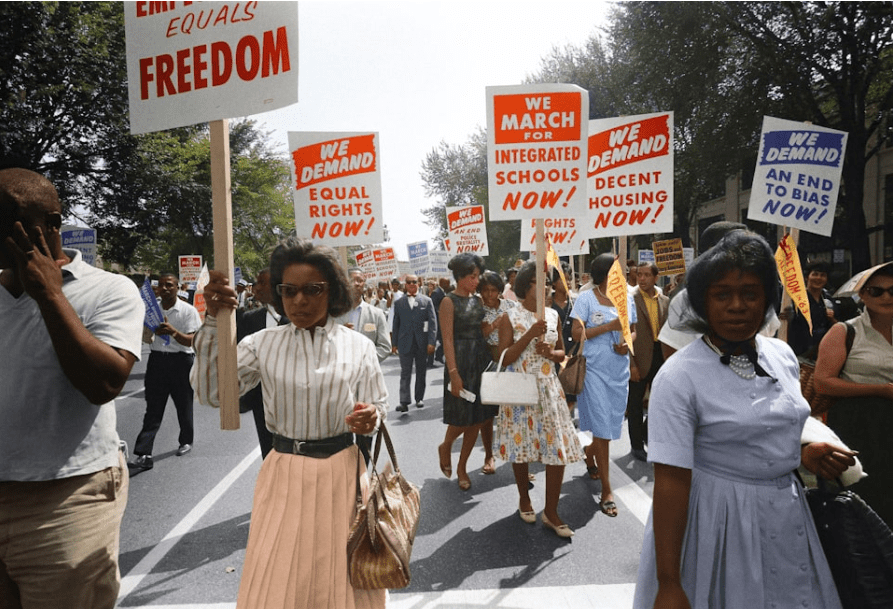
Slavery did not end—it morphed. Into convict leasing. Into Jim Crow. Into redlining. Into mass incarceration. Into “random” traffic stops. Into schools without resources and neighborhoods without grocery stores.
This is not ancient history. This is infrastructure.
When people say, “Why can’t we move on?” what they usually mean is, “Why can’t you stop reminding me?” But history that is unresolved does not politely stay in the past. It shows up in outcomes. In statistics. In who lives and who dies younger.
Black history forces us to confront an uncomfortable truth: progress in America has never been inevitable. It has been resisted at every step. Every inch gained was fought for by people willing to risk their lives, their livelihoods, and their children’s futures.
And the resistance never stopped.
Today’s attacks on voting rights, education, bodily autonomy, and protest are not new. They are familiar. They follow the same pattern: restrict, punish, erase, deny.
Black History Month is not about celebrating exceptions. It is about recognizing patterns.
It is not about proving that America can be good. It is about reckoning with the fact that America has often chosen not to be.
And yet—Black history is also a record of imagination. Of joy. Of creativity that flourished in the cracks of oppression. Music, language, art, food, humor—all forged in conditions that should have crushed the human spirit.
That is not a miracle. That is resilience.
This month, I am not here to offer comfort. I am here to offer truth. Because truth is the foundation of any justice worth having.
Black history does not ask us to admire it.
It asks us to learn from it.
My February newsletters will focus on Black History. I hope we all learn, reflect and take action to address ongoing racism and its effects.
Regards,
Julie Bolejack, MBA
I’m deeply grateful for each of you who reads and subscribes — truly. If my writing resonates with you, I’d love for you to share it with others who might need it too.
New readers can subscribe at:
to receive my writing directly in their inbox, where we can happily bypass the algorithms, the censors, and the ever-watchful overlords.
 JulieBolejack
Leave a comment